Should you buy a prebuilt gaming PC or build your own in 2026? Both options have grown more attractive, and the right answer depends on your budget, time, and technical confidence. Let’s settle the debate with hard facts.
📊 Prebuilt vs Custom PC: Direct Comparison
| Factor | Prebuilt | Custom Build |
|---|---|---|
| Price per performance | 10–20% premium | ✅ Better value |
| Assembly required | ✅ None | 2–4 hours |
| Warranty | ✅ Whole-system | Per-component |
| Component choice | Limited | ✅ Full control |
| Upgradeability | Often proprietary PSU | ✅ Standard ATX |
| Software bloat | Often present | ✅ Clean install |
| Learning experience | None | ✅ You understand your PC |
🏆 When to Choose a Prebuilt
Prebuilt PCs have improved dramatically. Brands like Lenovo Legion, HP Omen, and ASUS ROG now ship systems with quality components including Corsair Vengeance DDR5, proper NVMe SSDs, and decent cooling. Go prebuilt if:
- ✅ You want to start gaming immediately
- ✅ You’re not comfortable building
- ✅ You value a single point of contact for support
- ✅ The price difference is under €100 vs an equivalent custom build
🛒 Check Best Prebuilt PCs on Amazon
🔧 When to Build Your Own
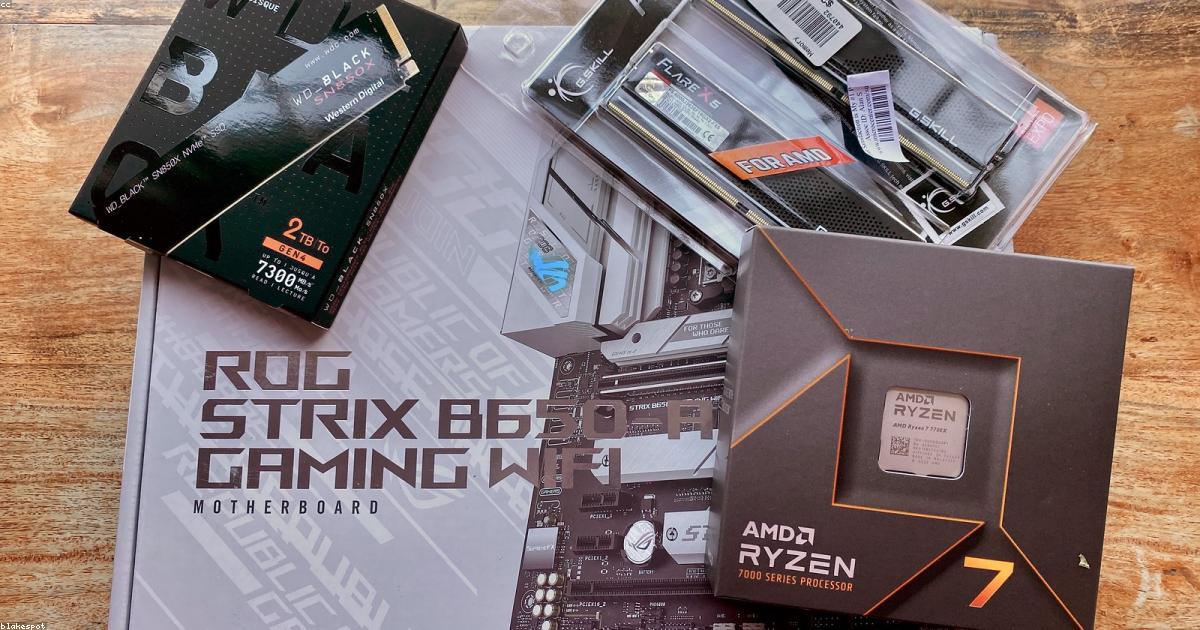
Custom builds shine when you want specific components — say, the AMD Ryzen 5 7600X with an RTX 4070, 32GB Corsair Vengeance DDR5, a Samsung 990 Pro SSD, and an NZXT H7 case. You’ll pay 15–20% less than an equivalent prebuilt and know exactly what’s inside.
- ✅ Significant cost savings at mid-to-high end
- ✅ Choose every single component to your preference
- ✅ Standard ATX PSU — easy future GPU upgrades
- ❌ Takes 2–4 hours and some research upfront
- ❌ No single warranty covers the whole system
🛒 Check NZXT H7 Case on Amazon
📋 The Verdict
👉 At budgets under €800, prebuilt systems often match or beat custom builds after accounting for time and shipping. Above €1000, custom builds typically offer 15–20% better value. There is no wrong answer — both paths lead to great gaming.
Todo lo que necesitas saber sobre PCs gaming
Elegir el PC gaming adecuado puede marcar una gran diferencia en tu experiencia diaria. En este artículo reunimos los aspectos más importantes a tener en cuenta para que puedas tomar la mejor decisión según tu presupuesto y necesidades específicas.
GPU: el componente que define tu experiencia
La tarjeta gráfica es el motor de cualquier PC gaming. En 2026, la NVIDIA RTX 4060 Ti ofrece la mejor relación calidad/precio para 1080p y 1440p básico. La RTX 4070 Super es ideal para 1440p exigente. La RTX 4080 Super y RTX 4090 permiten 4K fluido con ray tracing. AMD ofrece la RX 7900 XTX y RX 7700 XT como alternativas competitivas. Verifica el consumo (TDP) para asegurarte de que tu fuente de alimentación es suficiente.
RAM y velocidad de memoria
16 GB de RAM DDR5 es el mínimo recomendado para gaming en 2026. Los juegos como los MMO o los de mundo abierto pueden usar hasta 14 GB de RAM. Para sistemas AMD Ryzen 7000, la velocidad de RAM importa mucho; busca al menos 6000 MT/s en modo EXPO. Para Intel, 5600-6000 MT/s es lo óptimo. 32 GB es recomendable si combinas gaming con streaming o edición de vídeo.
Refrigeración, fuente y caja
Una buena refrigeración de CPU (Noctua NH-D15 o AIO de 240 mm) es esencial para evitar el throttling térmico. La fuente de alimentación debe ser certificada 80+ Gold con margen del 20-30 % sobre el consumo total del sistema. La caja debe tener buena ventilación; marcas como Fractal Design, Lian Li o NZXT ofrecen excelente calidad de construcción y gestión de cables.
¿Qué marcas son más recomendables?
En el mercado español, las marcas más valoradas son ASUS ROG, MSI y Corsair. Estas marcas combinan garantía de calidad, ecosistemas de software bien desarrollados y una amplia red de soporte técnico y servicio postventa en España.
Preguntas frecuentes
¿Es mejor montar un PC gaming o comprarlo ya montado?
Montarlo tú mismo suele ser un 15-25 % más económico y permite elegir exactamente los componentes que quieres. Además aprendes cómo funciona el hardware. Los PC preconfigurados ahorran tiempo y a veces incluyen garantía de ensamblaje. Para principiantes, un PC premontado de marca reconocida (ASUS, MSI) puede ser más sencillo como primer paso.
¿Cuánta GPU necesito para jugar en 4K?
Para 4K a 60 fps en alto/ultra en la mayoría de juegos, una RTX 4070 Super o RX 7900 XT es el mínimo razonable. Para 4K a 120 fps con ray tracing, necesitas una RTX 4080 Super o RTX 4090. El 4K es muy exigente y requiere una inversión considerable en GPU.
¿Qué fuente de alimentación necesito para mi PC gaming?
Calcula el consumo total de tu sistema (CPU TDP + GPU TDP + ~100 W para el resto) y añade un 30 % de margen. Para un sistema con RTX 4070 + Ryzen 7, una fuente de 750-850 W 80+ Gold es suficiente. Para RTX 4090, se recomienda 1000-1200 W. Invierte en una fuente de calidad; es el componente más crítico para la estabilidad del sistema.
🔍 Análisis individuales
- CyberpowerPC Gamer Xtreme VR8100 Review 2026: Gaming Competitivo Llave en Mano
- NZXT Player Two Review 2026: PC Gaming Preconfigurado con Estilo
- Intel NUC 13 Pro Review 2026: Mini PC de Alto Rendimiento
- Acer Nitro 50 N50-650 Review 2026: PC Gaming de Entrada Asequible
- MSI Codex R2 Review 2026: PC Gaming Compacto para Iniciarse
- HP OMEN 45L Gaming Desktop Review 2026: Refrigeración Superior
- Lenovo Legion Tower 5i Gen 8 Review 2026: Gaming Potente y Fiable
- Corsair ONE i300 Review 2026: El PC Gaming más Compacto y Potente
- ASUS ROG Strix GA35 Review 2026: Sobremesa Gaming de Alta Gama